
How to solve product design question in Product management interview
Product interview | Daily challenge (1/100)

I have come across this topic numerous times during my Product management interviews. This question holds the significance of how you gauge the problem and delve deeper into the problem to arrive at an accurate solution that solves real-user problems.
Before we proceed Let’s understand what is the Product design question means
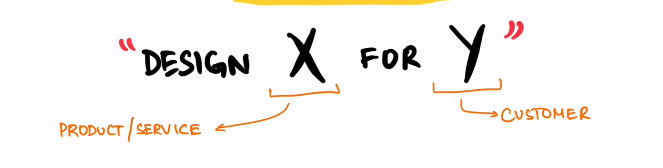
Example : Design hotel booking application for customers who wants to book online.
here, X - Hotel booking application whereas Y - Customer, i can say potential customers who are looking for online method to book a hotel.
Here, The following framework has proven effective in solving this problem, named “CIRCLES”
Let’s take an example and solve it by using this method for more clarity
Problem statement: In Swiggy Instamart, We want to increase electronic sales which lead to increased revenue
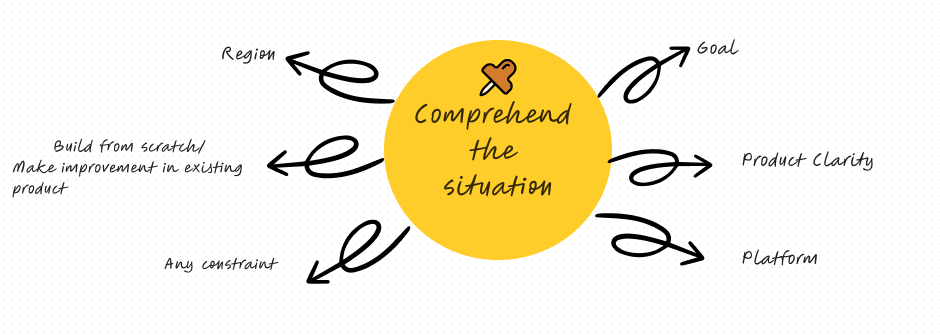
First step -"C" stands for comprehend the situation [What,How,Why,Who]This step is very crucial because it will give you direction for your solution. This means the more you understand the situation by asking clarifying questions, the more you understand the problem.
Here, you can ask the below questions to get into the problem statement
Interviewee: Before I start discussing a solution, I would like to ask a few clarifying questions, Is it okay?
Interviewer: Yes, of course
Product clarity: Are you referring to the existing product named Swiggy that delivers food and groceries? - Yes
Goal( Why you want to build this product) - We are aiming to achieve x% revenue growth from the electronic category.
Do you want me to build a feature from scratch or make modifications to an existing feature- It’s up to you . Okay, so I am thinking of making a new feature from scratch in the existing product
Platform ( Website/ Application (ioS/ Android) - Let's say both iOS and Android
Region ( Which city, or state do you want to target) - Bangalore
Constraint (Limitation) - No
Second step -"I" stands for Identify your user [ User Persona]In this section, We can get to know the customer segment for which we are building a product. Let's say we have 3 types of customers:
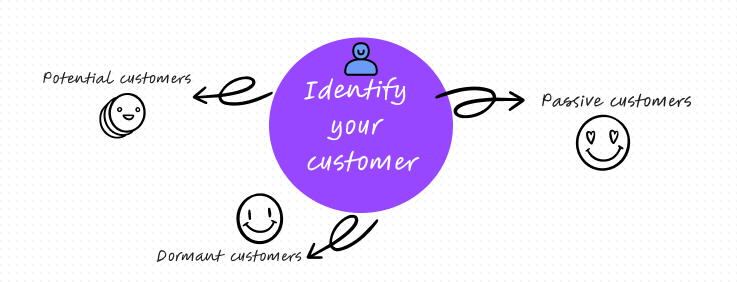
Potential / Power customers - Those users who are frequently using the Swiggy application.
Frequent/ Passive customers - Those users who are using Swiggy once a week.
Dormant/Medium customers - Those users who are using once a month.
Interviewee: We are targeting potential/ power customers who have the potential to buy products continually.
Third step -"R" stands for report customer needs[As__I want__ so that__]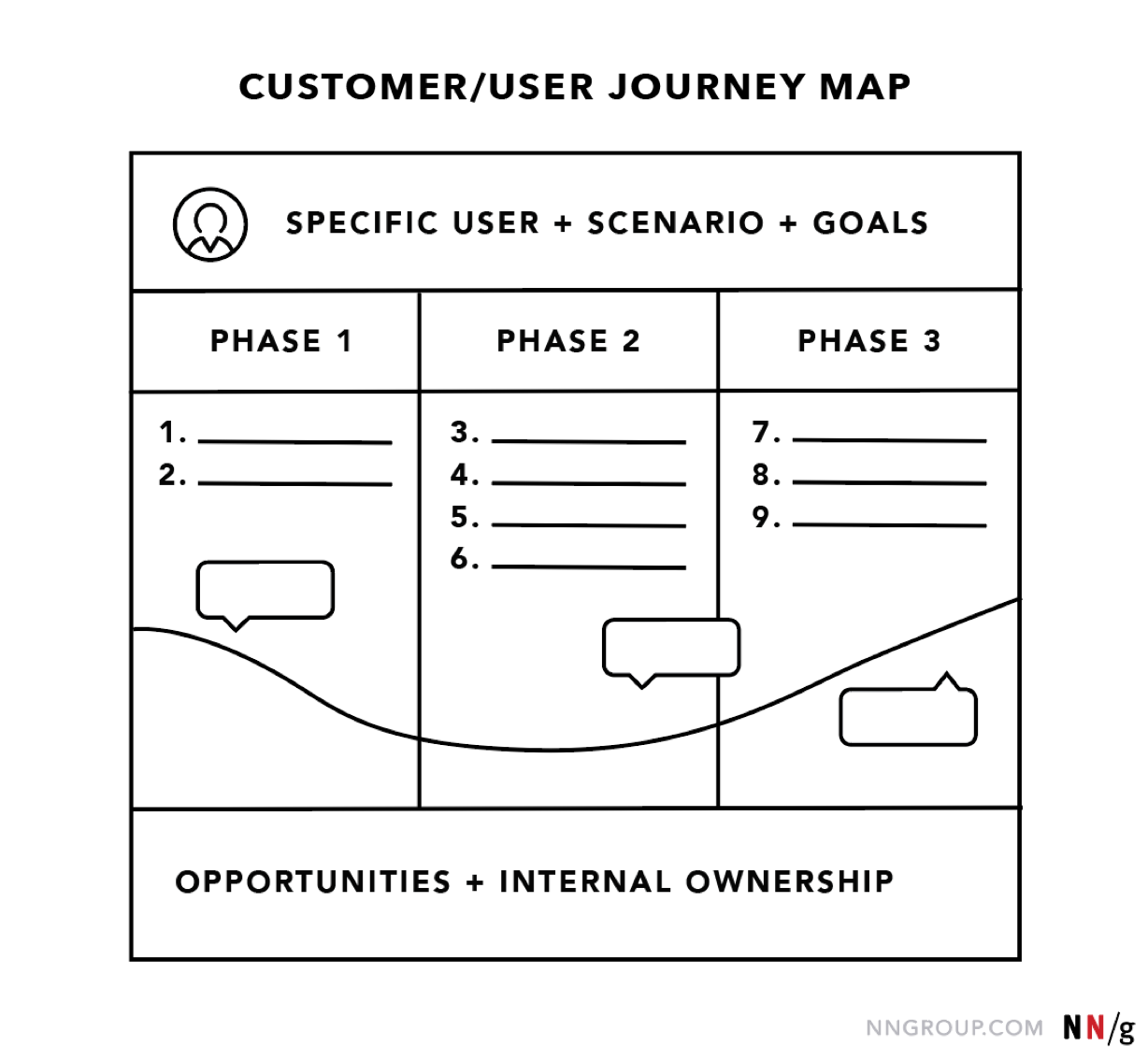
let’s analyse the user funnel to figure out the gap and foster the solution that fills the gap that the current user is facing with Swiggy and hence the business is impacted.
a) The user opens the Swiggy application
b) Open swiggy instamart
c) Scroll down to view the electronic store
d) Tap and view products
Fourth step -"C" stands for cut through prioritization [ User Journey/ needs]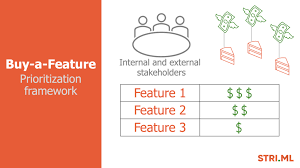
Based on the above user journey, I would like to focus on the area where users are facing challenges:
a) Visibility issue: It can be challenging for frequent users of the app to seamlessly access products, especially those who are not able to cater to them.
b)Awareness issue: The electronic category was recently added to Swiggy Instamart and there is a lack of awareness in the audience.
c) Genuine product security: People are not confident about buying the product because they can’t get the security that the product is genuine on the product detail page.
Fifth step -"L" stands for List down solution [ Appropriate Solutions along with metrics]
After analyzing the user journey, we have identified some gaps that can be addressed with the following solutions:
a) Visibility Issue
Add carousel banner at the top of the page
Add gamification like spin to win where Swiggy will offer electronic relevant offers/promo code
Add a popup to introduce new products or features to users that we have recently added to our app
b) Awareness Issue
We can nudge users by sending push notifications to spread news about our product.
As Swiggy Instamart is present on both the website and application so, we must launch the electronic category for web users or at least show a banner to keep users up-to-date.
c) Warranty Issue
Add warranty badge along with warranty details like genuine product with a 1-year warranty.
Fifth step -"E" stands for Evaluate tradeoffs [ Pitfall with your solutions/ Priortization criteria]I would like to list down the solution based on the impact-effort prioritization framework. It’s hone to execute the roadmap and execute the product and reach to the real users to know how fruitful this solution is to users.
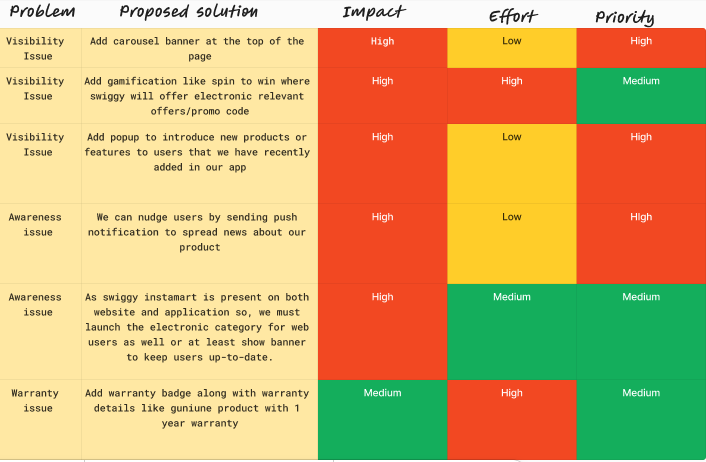
On the basis of impact-effort analysis and For a quick solution integration, I am assuming Solution 1( adding carousel banner), (adding popup ) from the visibility issue. From awareness issue, taking push notification as solution 2. The rest solutions will be considered once we get the result from the above solution in the iteration or re-iteration phase.
Here, we are considering the following metrics to evaluate the performance of the features that we are planning to launch via the A/B testing method
Overall metric
#app session generated by new vs returning users
#Click on Swiggy Instamart
#Daily active users
Conversion rate of new vs returning users from overall category - electronic category
Average revenue per user from the electronic category
a) Visibility issue-related metric [Add carousel banner]
#banner impression
#user clicked on the banner
# session generated from banner
#transaction via banner
b) Visibility issue-related metric [Add Popup]
# User view popup to get an understanding of the product.
b) Awareness issue-related metric [Push notification]
#users receive a push notification
#users open push notification
#view electronic products
#no. of transactions via push notification
Tradeoffs:
The proposed solution has some limitations that need to be addressed to set a benchmark for all stakeholders. It's important to anticipate all the concerns related to the solution. One concern is related to the warranty badge, where our inventory should be filled with major products that have warranties.
Fifth step -"S" stands for Summary [Recap of your ideation]"I would like to summarize my thoughts to bring more clarity. We are aiming to provide a solution for power users who are likely to purchase products from our application. In addition to buying groceries and other items, we want to encourage them to buy electronic products as well. After analyzing the user journey, I found that power users struggle to find electronic products on our platform. To solve this issue, we plan to implement two solutions: increasing visibility and raising awareness. With these solutions, users will be able to easily find and purchase electronic products from our platform.
Thanks for reading this article. To learn, share and subscribe to my blog.
For more product design question practice, Go to PM exponent or PM Exercise to learn FAANG companies’ pattern questions.